

- English
 Español
 Português
 русский
 Français
 日本語
日本語 Deutsch
 tiếng Việt
 Italiano
 Nederlands
 ภาษาไทย
 Polski
 한국어
한국어 Svenska
 magyar
 Malay
Malay বাংলা ভাষার
 Dansk
Dansk Suomi
Suomi हिन्दी
 Pilipino
 Türkçe
 Gaeilge
 العربية
 Indonesia
 Norsk
Norsk تمل
تمل český
český ελληνικά
 український
 Javanese
 فارسی
فارسی தமிழ்
தமிழ் తెలుగు
 नेपाली
 Burmese
 български
 ລາວ
ລາວ Latine
 Қазақша
 Euskal
 Azərbaycan
 Slovenský jazyk
 Македонски
 Lietuvos
 Eesti Keel
 Română
 Slovenski
 मराठी
मराठी Srpski језик

Why Is All Stainless Steel Plate Heat Exchanger Essential for Modern Industrial Cooling?
Industrial systems demand reliable heat transfer, corrosion resistance, energy efficiency, and long-term durability. An All Stainless Steel Plate Heat Exchanger has become one of the most trusted solutions across food processing, pharmaceuticals, HVAC, marine engineering, chemical manufacturing, and energy industries. This comprehensive guide explains how these heat exchangers work, why stainless steel matters, how to choose the right model, and what benefits companies gain from investing in advanced plate heat exchange technology.
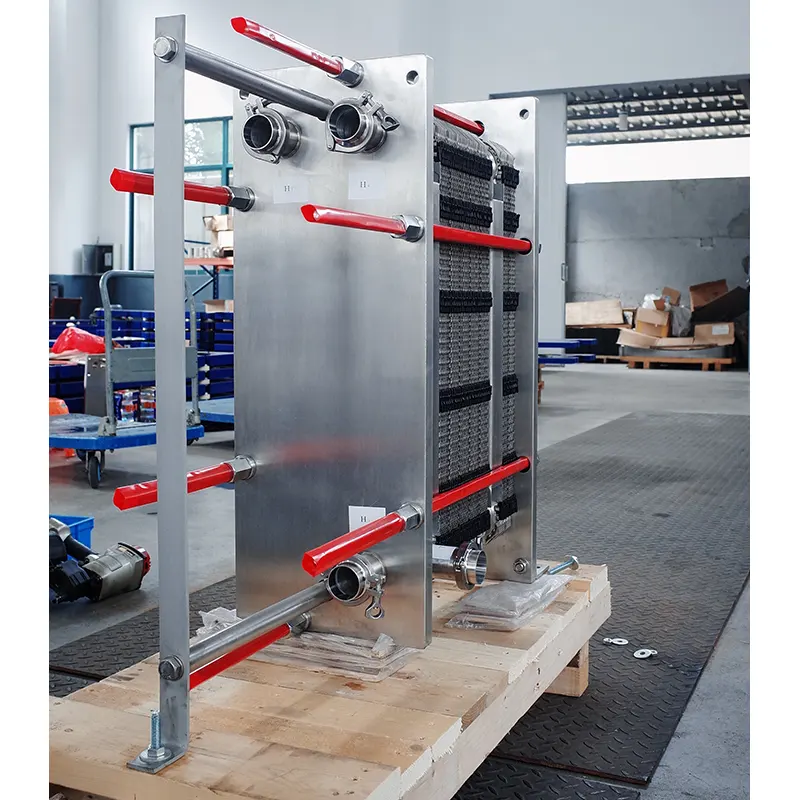
Table of Contents
- 1. Introduction to All Stainless Steel Plate Heat Exchangers
- 2. How Does an All Stainless Steel Plate Heat Exchanger Work?
- 3. Major Advantages of Stainless Steel Plate Heat Exchangers
- 4. Which Industries Use Plate Heat Exchangers?
- 5. Why Stainless Steel Is the Preferred Material
- 6. Plate Heat Exchanger vs Traditional Heat Exchanger
- 7. How to Choose the Right Plate Heat Exchanger
- 8. Maintenance and Cleaning Best Practices
- 9. Energy Efficiency and Cost Savings
- 10. Common Problems and Solutions
- 11. Future Trends in Heat Exchange Technology
- 12. Frequently Asked Questions
- 13. Conclusion
1. Introduction to All Stainless Steel Plate Heat Exchangers
Heat exchangers are essential components in industrial operations where thermal energy must be transferred efficiently between two fluids. Among the many types available, the All Stainless Steel Plate Heat Exchanger stands out because of its exceptional corrosion resistance, compact design, hygienic performance, and superior heat transfer efficiency.
Unlike traditional shell-and-tube systems, plate heat exchangers use multiple thin corrugated plates stacked together. These plates create channels that allow hot and cold fluids to flow alternately. The design maximizes surface contact, resulting in highly efficient heat transfer even in compact installations.
The use of stainless steel throughout the entire structure provides enhanced durability in harsh operating environments. Industries handling corrosive liquids, high temperatures, or strict sanitary requirements increasingly prefer stainless steel plate heat exchangers for long-term operational reliability.
Key Benefits at a Glance
- Excellent corrosion resistance
- High thermal efficiency
- Compact footprint
- Easy maintenance and cleaning
- Lower energy consumption
- Long operational lifespan
- Suitable for sanitary applications
- Reduced maintenance costs
2. How Does an All Stainless Steel Plate Heat Exchanger Work?
The operating principle is relatively simple but extremely effective. Multiple stainless steel plates are pressed together to form narrow flow channels. Hot fluid flows through one channel while cold fluid flows through the adjacent channel in the opposite direction.
Heat transfers through the thin stainless steel plates without mixing the fluids. The corrugated pattern on the plates increases turbulence, improving thermal transfer efficiency significantly.
| Component | Function |
|---|---|
| Stainless Steel Plates | Transfer heat between fluids |
| Gaskets | Prevent fluid leakage |
| Frame | Holds plate assembly together |
| Connection Ports | Allow fluid entry and exit |
Counter-flow configuration allows the exchanger to achieve close temperature approaches and maximize energy recovery. This efficiency explains why plate heat exchangers are commonly chosen for modern industrial systems.
3. Major Advantages of Stainless Steel Plate Heat Exchangers
High Efficiency
Plate heat exchangers can achieve much higher thermal efficiency compared to traditional systems because of the large surface area and turbulent fluid flow.
Compact Design
Their compact structure saves valuable installation space, making them ideal for factories with limited room.
Corrosion Resistance
Stainless steel materials withstand moisture, chemicals, and aggressive fluids better than many alternatives.
Easy Maintenance
Most plate heat exchangers can be disassembled easily for inspection, cleaning, and gasket replacement.
Many industries value the reduced downtime and lower operating costs associated with stainless steel plate heat exchangers.
4. Which Industries Use Plate Heat Exchangers?
All Stainless Steel Plate Heat Exchangers are widely used across numerous sectors due to their adaptability and reliable performance.
| Industry | Application |
|---|---|
| Food & Beverage | Milk pasteurization, juice cooling, brewery systems |
| HVAC | Chilled water and district cooling systems |
| Pharmaceutical | Sanitary thermal processing |
| Chemical Processing | Acid and solvent temperature control |
| Marine Industry | Engine cooling and seawater systems |
| Power Plants | Heat recovery operations |
The hygienic properties of stainless steel make these systems especially important in industries with strict cleanliness standards.
5. Why Stainless Steel Is the Preferred Material
Material selection directly impacts heat exchanger durability and performance. Stainless steel is considered one of the best materials because it combines mechanical strength with excellent corrosion resistance.
Grades such as SS304 and SS316 are commonly used depending on environmental conditions and fluid composition.
Reasons Stainless Steel Performs Better
- Resists rust and oxidation
- Maintains strength at high temperatures
- Supports hygienic operations
- Provides long service life
- Reduces contamination risk
- Suitable for aggressive chemicals
For industries processing food, medicine, or corrosive chemicals, stainless steel becomes more than an option—it becomes a necessity.
6. Plate Heat Exchanger vs Traditional Heat Exchanger
| Feature | Plate Heat Exchanger | Shell & Tube Heat Exchanger |
|---|---|---|
| Heat Transfer Efficiency | Very High | Moderate |
| Space Requirement | Compact | Large |
| Maintenance | Easy | Complex |
| Initial Cost | Competitive | Higher for equivalent efficiency |
| Cleaning | Quick access | Time-consuming |
Although shell-and-tube exchangers still serve certain heavy-duty applications, plate heat exchangers dominate in situations requiring high thermal efficiency and reduced installation space.
7. How to Choose the Right Plate Heat Exchanger
Choosing the correct model requires careful evaluation of several operating conditions.
Important Selection Factors
- Fluid type and chemical composition
- Operating pressure
- Temperature range
- Flow rate requirements
- Heat transfer capacity
- Available installation space
- Maintenance accessibility
- Future expansion needs
Buyers should also evaluate gasket compatibility and plate design. Working with experienced manufacturers helps ensure the equipment matches actual production requirements.
A customized solution often delivers better long-term performance than selecting a standard model without technical evaluation.
8. Maintenance and Cleaning Best Practices
Regular maintenance is critical for maintaining heat transfer efficiency and preventing unexpected shutdowns.
- Inspect gaskets periodically
- Monitor pressure drops
- Check for scaling and fouling
- Use proper cleaning chemicals
- Replace damaged plates immediately
- Perform scheduled performance testing
Many operators use CIP (Clean-in-Place) systems to reduce downtime. Proper cleaning prevents scale accumulation, which can significantly reduce thermal efficiency.
Maintenance Tip
Preventive maintenance costs far less than emergency repairs. A consistent inspection schedule can extend equipment lifespan by many years.
9. Energy Efficiency and Cost Savings
Energy efficiency has become a major concern across industrial operations. Plate heat exchangers help companies reduce operational expenses by improving thermal recovery and minimizing wasted energy.
Because the plates create highly turbulent flow, less energy is needed to achieve effective heat transfer.
| Benefit | Impact |
|---|---|
| Reduced Energy Use | Lower utility costs |
| Heat Recovery | Improved system efficiency |
| Compact Design | Reduced installation cost |
| Long Service Life | Lower replacement frequency |
For facilities operating continuously, even small efficiency improvements can result in substantial annual savings.
10. Common Problems and Solutions
Despite their reliability, plate heat exchangers may experience operational issues if not properly maintained.
| Problem | Cause | Solution |
|---|---|---|
| Leakage | Damaged gaskets | Replace gaskets |
| Reduced Efficiency | Scaling or fouling | Perform cleaning |
| Pressure Drop Increase | Blocked channels | Inspect flow passages |
| Corrosion | Improper material selection | Upgrade stainless steel grade |
Understanding these common issues helps operators minimize downtime and maintain stable performance.
11. Future Trends in Heat Exchange Technology
The heat exchanger industry continues evolving rapidly. Manufacturers are investing in improved plate geometry, advanced sealing technologies, and smarter monitoring systems.
Future developments are expected to include:
- Digital monitoring integration
- Smart predictive maintenance
- Higher thermal efficiency plate patterns
- Improved anti-fouling surface technologies
- More compact industrial designs
- Advanced corrosion-resistant alloys
As industries continue prioritizing efficiency and sustainability, stainless steel plate heat exchangers will remain critical components in industrial thermal management systems.
12. Frequently Asked Questions
What is the lifespan of a stainless steel plate heat exchanger?
With proper maintenance, many units operate efficiently for 15–25 years or longer depending on operating conditions and fluid quality.
Can plate heat exchangers handle corrosive chemicals?
Yes. Stainless steel models, especially SS316 versions, provide excellent resistance against many aggressive chemicals and industrial fluids.
Why are plate heat exchangers more efficient?
Their corrugated plate design creates turbulence, which significantly improves heat transfer efficiency while minimizing energy loss.
Are stainless steel plate heat exchangers suitable for food processing?
Absolutely. Stainless steel offers hygienic performance, easy cleaning, and contamination resistance, making it ideal for food and beverage applications.
How often should cleaning be performed?
Cleaning frequency depends on operating conditions, fluid quality, and scaling tendencies. Many systems require periodic inspection every few months.
13. Conclusion
The All Stainless Steel Plate Heat Exchanger has become one of the most efficient and reliable thermal transfer solutions for modern industry. Its compact design, high heat transfer efficiency, corrosion resistance, and long-term operational stability make it an excellent investment for businesses seeking performance and durability.
Whether used in food processing, pharmaceuticals, HVAC systems, marine applications, or chemical manufacturing, stainless steel plate heat exchangers help companies improve energy efficiency, reduce maintenance costs, and maintain stable production processes.
Jiangyin Daniel Cooler Co., Ltd. specializes in high-quality All Stainless Steel Plate Heat Exchangers designed for industrial performance, durability, and efficiency. Our professional engineering team can help you select the right thermal solution for your application requirements.
Contact us today to discuss your project requirements and discover customized heat exchanger solutions for your business.
Send Inquiry




X
We use cookies to offer you a better browsing experience, analyze site traffic and personalize content. By using this site, you agree to our use of cookies.
Privacy Policy