

- English
 Español
 Português
 русский
 Français
 日本語
日本語 Deutsch
 tiếng Việt
 Italiano
 Nederlands
 ภาษาไทย
 Polski
 한국어
한국어 Svenska
 magyar
 Malay
Malay বাংলা ভাষার
 Dansk
Dansk Suomi
Suomi हिन्दी
 Pilipino
 Türkçe
 Gaeilge
 العربية
 Indonesia
 Norsk
Norsk تمل
تمل český
český ελληνικά
 український
 Javanese
 فارسی
فارسی தமிழ்
தமிழ் తెలుగు
 नेपाली
 Burmese
 български
 ລາວ
ລາວ Latine
 Қазақша
 Euskal
 Azərbaycan
 Slovenský jazyk
 Македонски
 Lietuvos
 Eesti Keel
 Română
 Slovenski
 मराठी
मराठी Srpski језик

What Is a Brazed Heat Exchanger and Why Does It Matter?
A brazed heat exchanger is a compact, high‑efficiency thermal transfer component commonly used in HVAC, refrigeration, and industrial applications. This article dives deep into what a brazed heat exchanger is, how it works, its benefits and limitations, and how to choose the right one for your project. Whether you are evaluating performance, durability, or cost, you'll gain clarity on this essential piece of thermal management equipment.
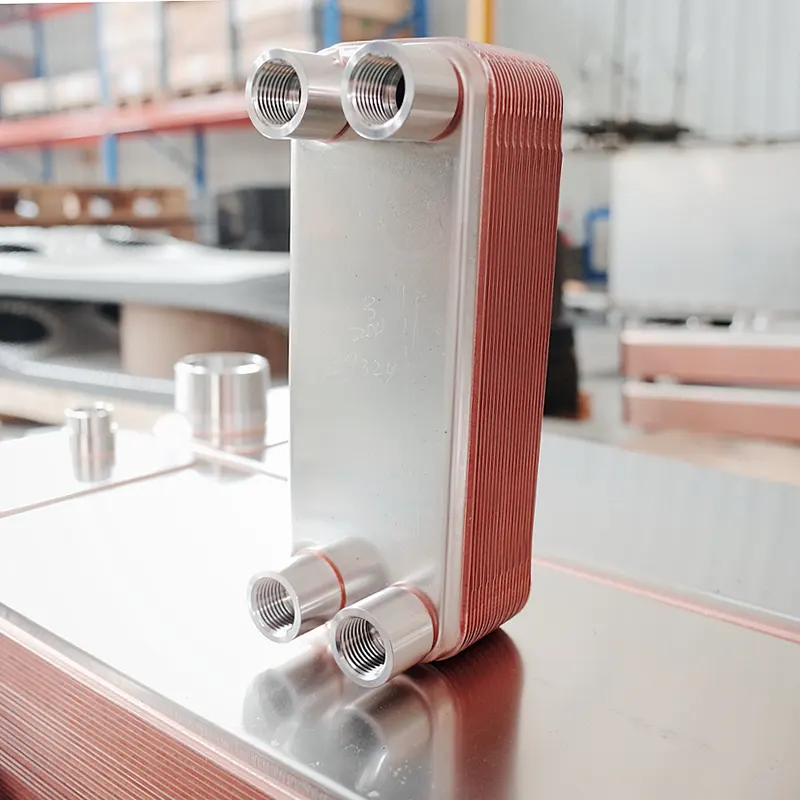
Table of Contents
What Is a Brazed Heat Exchanger?
A brazed heat exchanger is a type of thermal transfer device that joins metal components using a molten filler metal at temperatures above 450 °C but below the melting point of the base metals. The brazing process creates strong, leak‑proof joints that allow for efficient heat transfer between fluids without mixing them. Unlike welded or mechanically fastened heat exchangers, brazed units offer high compactness and durability.
How Does a Brazed Heat Exchanger Work?
The operation of a brazed heat exchanger leverages the principles of conduction and convection. Two separate fluid streams flow through adjacent channels or plates. Heat energy moves from the hot fluid to the cold fluid across the brazed metal walls. The brazed joints ensure good thermal contact and structural integrity.
- Hot fluid enters one side of the heat exchanger.
- Cold fluid enters the adjacent channel.
- Heat is transferred through the brazed metal surface.
- Cooled hot fluid and heated cold fluid exit on the other end.
Where Is a Brazed Heat Exchanger Used?
Brazed heat exchangers find use across industries due to their efficiency and compact design. Common applications include:
- HVAC systems (air conditioning and heat pumps).
- Refrigeration units (commercial and industrial chillers).
- Automotive cooling and turbocharger systems.
- Industrial process heat recovery systems.
- Fuel cell thermal management.
Manufacturers like Jiangyin Daniel Cooler Co., Ltd. design brazed heat exchangers tailored to specific operating conditions such as high pressure, corrosive environments, and high flow rates.
What Are the Key Benefits of Brazed Heat Exchangers?
There are many reasons engineers choose brazed heat exchangers over other thermal solutions. Below is a detailed comparison of advantages:
| Benefit | Description |
|---|---|
| High Efficiency | Excellent thermal conductivity due to intimate metal contact. |
| Compact Design | Smaller footprint than shell‑and‑tube or finned exchangers. |
| Leak‑Proof | Brazed joints provide tight seals, reducing leakage risk. |
| Durable | Resistant to vibration and mechanical stress. |
| Low Maintenance | No gaskets or seals to replace, reducing operating costs. |
Manufacturers, especially Jiangyin Daniel Cooler Co., Ltd., leverage advanced brazing techniques to deliver consistent quality and longevity in demanding applications.
What Are the Limitations of Brazed Heat Exchangers?
While brazed heat exchangers have many advantages, there are also drawbacks to consider:
| Limitation | Impact |
|---|---|
| Serviceability | Not easily disassembled for cleaning or repairs. |
| Cost | Higher upfront cost relative to basic heat transfer devices. |
| Temperature Limits | Filler metal properties restrict maximum operating temperatures. |
| Material Compatibility | Requires careful selection to avoid corrosion. |
How to Select the Right Brazed Heat Exchanger?
Choosing the right brazed heat exchanger involves evaluating operating conditions and performance targets. Key factors include:
- Operating Temperature and Pressure: Match exchanger specifications to your system needs.
- Fluid Compatibility: Ensure materials resist corrosion and fouling.
- Thermal Load: Calculate required heat transfer capacity.
- Size Constraints: Consider installation space and maintenance access.
Consulting with a quality provider like Jiangyin Daniel Cooler Co., Ltd. can help tailor a solution for industrial, commercial, or specialized applications.
Frequently Asked Questions
- What differentiates a brazed heat exchanger from other types?
- A brazed heat exchanger uses strong metallurgical bonds formed by brazing, resulting in compact, leak‑resistant units that excel in high‑efficiency applications compared to gasketed or welded exchangers.
- Are brazed heat exchangers suitable for high‑pressure applications?
- Yes, when designed correctly and manufactured with materials rated for high pressures, brazed heat exchangers can handle demanding conditions used in industrial refrigeration or hydraulic cooling.
- Can I service brazed heat exchangers?
- Brazed units are generally not designed for disassembly, so they require careful filtration and preventive maintenance to avoid internal fouling.
- How does material choice impact performance?
- Materials like stainless steel or copper impact thermal performance, corrosion resistance, and operating ranges. Proper selection ensures long life in specific fluid environments.
- What applications benefit most from brazed heat exchangers?
- Compact HVAC systems, automotive cooling systems, and industrial heat recovery processes benefit due to space limitations and high thermal transfer needs.
Send Inquiry




X
We use cookies to offer you a better browsing experience, analyze site traffic and personalize content. By using this site, you agree to our use of cookies.
Privacy Policy