

- English
 Español
 Português
 русский
 Français
 日本語
日本語 Deutsch
 tiếng Việt
 Italiano
 Nederlands
 ภาษาไทย
 Polski
 한국어
한국어 Svenska
 magyar
 Malay
Malay বাংলা ভাষার
 Dansk
Dansk Suomi
Suomi हिन्दी
 Pilipino
 Türkçe
 Gaeilge
 العربية
 Indonesia
 Norsk
Norsk تمل
تمل český
český ελληνικά
 український
 Javanese
 فارسی
فارسی தமிழ்
தமிழ் తెలుగు
 नेपाली
 Burmese
 български
 ລາວ
ລາວ Latine
 Қазақша
 Euskal
 Azərbaycan
 Slovenský jazyk
 Македонски
 Lietuvos
 Eesti Keel
 Română
 Slovenski
 मराठी
मराठी Srpski језик

Why Is a Brazed Heat Exchanger the Smart Choice for Modern Thermal Systems?
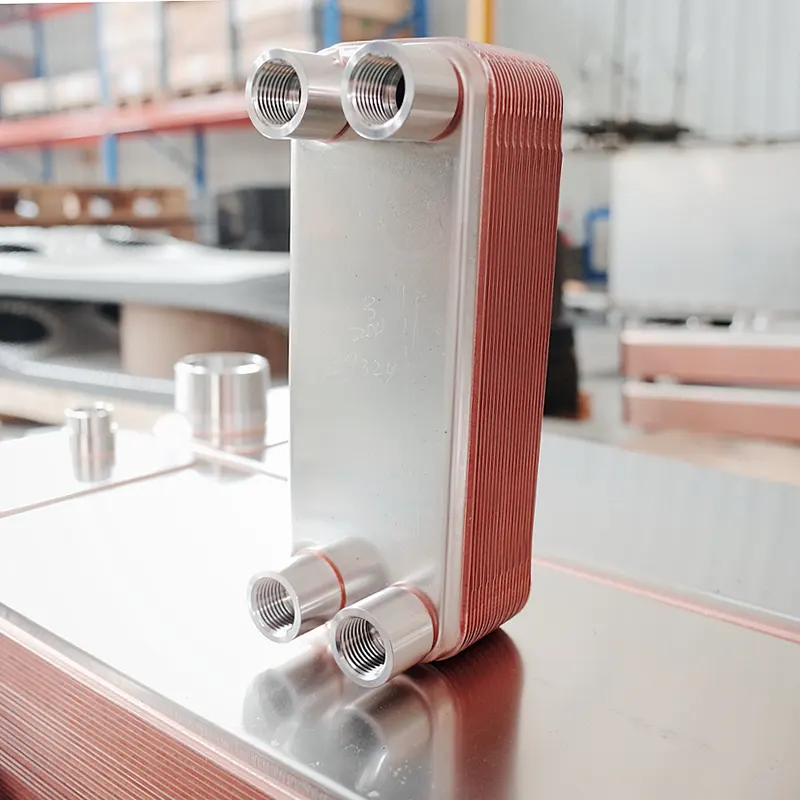
A Brazed Heat Exchanger is widely used in HVAC, refrigeration, energy, and industrial processing due to its compact design, high thermal efficiency, and reliability. In many engineering projects I handle, this solution stands out because it delivers stable heat transfer performance while reducing installation space and maintenance demands. To help you understand whether it is the right option for your system, this article breaks down its functions, product parameters, working effect, and overall importance. You will also find a concise specs list and an FAQ section designed to provide practical, decision-oriented insights. Jiangyin Daniel Cooler Co., Ltd. proudly offers a range of models engineered for long-term durability and high performance.
What Makes a Brazed Heat Exchanger Work Efficiently?
A Brazed Heat Exchanger operates by channeling two fluids through alternating plates, where copper brazing seals the structure and ensures excellent thermal conductivity. This design offers:
-
High heat-transfer efficiency due to the large plate surface area
-
Compact size with a high heat-exchange capacity
-
Strong pressure resistance
-
Minimal maintenance over long-term use
Because of this construction, the device is ideal for chillers, heat pumps, hydraulic systems, energy recovery, and more.
How Does a Brazed Heat Exchanger Improve Thermal Performance?
When used in HVAC or industrial cooling systems, the unit delivers:
-
Faster temperature exchange thanks to turbulent flow channels
-
Lower energy consumption due to reduced thermal resistance
-
Stable performance even under long operation cycles
-
Extended life span because of its all-metal sealed structure
In real applications, users often report noticeable reductions in system operating costs and improved temperature stability.
Why Are Product Specifications Important When Selecting a Brazed Heat Exchanger?
Choosing the right model requires understanding your system flow rate, working pressure, and temperature requirements. Jiangyin Daniel Cooler Co., Ltd. provides custom configurations to ensure optimal matching between your equipment and each exchanger model.
Key Product Parameters
Main Technical Parameters List
| Parameter | Specification |
|---|---|
| Heat Exchanger Type | Brazed Plate Design |
| Plate Material | Stainless Steel 304/316L |
| Brazing Material | Copper or Nickel (for high-corrosion environments) |
| Working Pressure | Up to 3.0 MPa |
| Working Temperature Range | –196°C to +225°C |
| Flow Rate | Customizable based on application |
| Plate Quantity | 10–300 plates optional |
| Connection Type | Threaded / Flanged / Welded |
| Application Scope | HVAC, Heat Pump, Chiller, Hydraulic Oil Cooling |
Additional Features
-
High thermal efficiency
-
Extremely compact structure
-
Excellent mechanical strength
-
Suitable for refrigerants like R22, R134A, R410A, R407C, R404A, etc.
-
Available in multiple installation standards and port sizes
Which Applications Benefit the Most From a Brazed Heat Exchanger?
A Brazed Heat Exchanger is ideal for systems where space, efficiency, and structural stability are crucial:
-
Heat pump units
-
Air conditioning and refrigeration
-
Energy recovery units
-
Hydraulic oil cooling
-
District heating systems
-
Industrial heating and cooling processes
Its adaptability makes it a preferred choice among system engineers, OEM manufacturers, and energy-saving equipment suppliers.
What Makes the Brazed Heat Exchanger Essential in Modern HVAC and Industrial Systems?
Its importance is rooted in:
-
High efficiency: Achieves rapid heat exchange with minimal energy loss
-
Compactness: Saves installation space
-
Reliability: Copper-brazed plates prevent leakage under high pressure
-
Cost-effectiveness: Reduces long-term operating costs
-
Environment-friendly performance: Supports low-carbon system designs
These advantages explain why the technology is increasingly adopted across global markets.
FAQ About Brazed Heat Exchanger
Q1: What is a Brazed Heat Exchanger and how does it differ from a traditional heat exchanger?
A1: It is a compact plate-type heat exchanger bonded with copper or nickel brazing. Unlike shell-and-tube types, it offers higher heat-transfer efficiency, smaller size, and lower maintenance.
Q2: How do I choose the right Brazed Heat Exchanger for my system?
A2: Selection is based on flow rate, pressure, temperature, refrigerant type, and desired heat-transfer capacity. Providing these details allows manufacturers like Jiangyin Daniel Cooler Co., Ltd. to recommend the best matching model.
Q3: What maintenance does a Brazed Heat Exchanger require?
A3: It typically requires minimal maintenance. Regular flushing may be needed only if the system water quality is poor or contains debris.
Q4: Can a Brazed Heat Exchanger be used with multiple refrigerants?
A4: Yes. Most models support common refrigerants such as R134A, R22, R410A, and more. For corrosive fluids, nickel-brazed versions are recommended.
Contact Us
If you are looking for a reliable, high-efficiency Brazed Heat Exchanger, Jiangyin Daniel Cooler Co., Ltd. offers customized solutions tailored to your system requirements. Feel free to contact our team for specifications, pricing, or technical support.
Send Inquiry




X
We use cookies to offer you a better browsing experience, analyze site traffic and personalize content. By using this site, you agree to our use of cookies.
Privacy Policy